Beyond the goals: is this what utopia looks like?
Everyone seems to be talking about one thing at the moment.
The World Cup.
And how could we not?
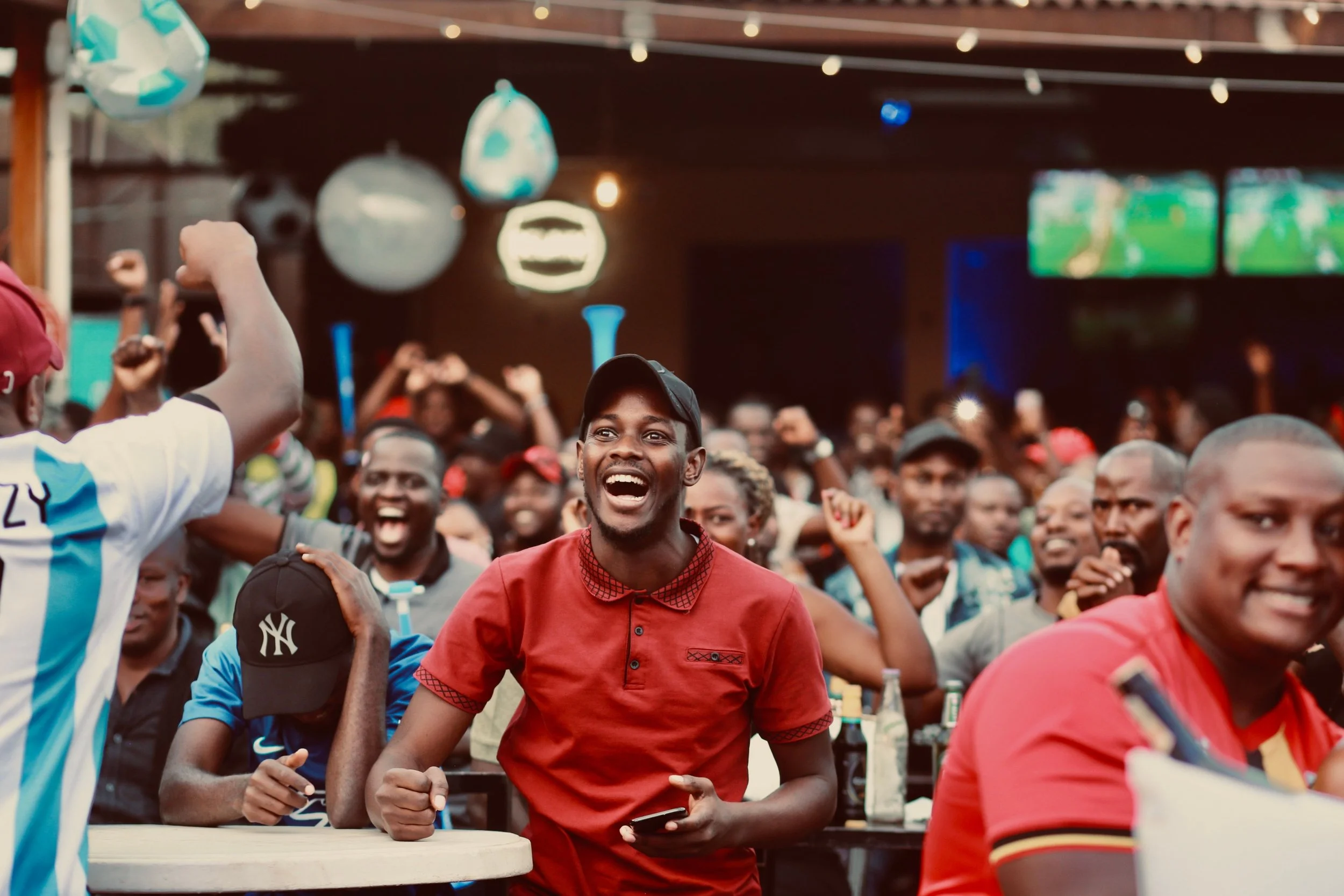
At a time when the world feels increasingly divided, we've watched people from countries separated by geography, politics and culture dance together, swap jerseys and flags, cheer for nations they've never visited, and celebrate alongside complete strangers.
It's certainly been a much needed balm to the existential dread many of us are feeling, but it's also been something much bigger: a real-time case study on the power and importance of diversity, inclusion and belonging. When we connect with people who are different from us, we become stronger, more empathetic and from the looks of things on social media — happier.
But, football has always had a dark side. Beneath the joy sits a culture shaped by corruption, inequality, discrimination and violence. While millions have been celebrating together, those tensions haven't disappeared and we’re keen to unpack all of it - the good and the bad.
This month, we're exploring five fascinating cultural phenomena from the World Cup, celebrating the moments that have inspired us, while shining a light on the conversations that deserve more attention.
Phenomenon 1: The lion and the mouse
Scots in Boston. Koreans in Mexico. Algerians in Kansas.
Unlikely pairings, and unexpected love stories.
We’ve seen Boston embrace Scottish fans, also known as the Tartan Army, who brought joy and a bit of playful chaos to the streets. Beyond the matches, Scots themselves became part of the spectacle: kilts held down over grates to avoid a slightly more scandalous Marilyn Monroe moment, and cities dotted with traffic cones on statues, a prank that began in Glasgow in the 1980s, when the Duke of Wellington statue outside the Gallery of Modern Art first started appearing with an orange traffic cone thanks to late-night passers-by.
Travelling to Mexico, Korean fans encountered a culture of vibrant public celebration that contrasted with Korea's more reserved social norms. Yet despite being worlds apart, both cultures shared a love of music, including K-pop. The result was a heartwarming cultural exchange that saw street salsa parties blend seamlessly with Gangnam Style dance-offs, delighting fans around the world.
Online, both instances sparked lighthearted predictions of a World Cup “baby boom” of cross-cultural families. While playful, it reflects something real: younger generations are increasingly borderless, working more nomadically, connected more globally, and less bound by traditional relationship norms.
Then there’s Lawrence, Kansas, where Algerian fans turned a small Midwestern city into a site of unexpected global connection. It’s pretty remarkable that a place with a population of just under 100,000 could have such an immense impact on people coming from the largest country in Africa.
But this seemingly unexpected kinship may, at least in part, have stemmed from a shared appreciation for creating warm, welcoming experiences for guests. Hospitality is deeply rooted in Arab and African cultures, and echoed in many Midwestern American traditions, this ehtos quickly became a common language of care between them.
As one fan put it: “You guys have the best hospitality. It’s so nice to see Americans supporting Algeria.”
These moments don’t just create friendships, they create global bonds that challenge assumptions. They remind us that difference isn’t division, and that shared values often exist where we least expect them.
At a time when fear-based narratives continue to rise globally, these acts of connection become essential forms of resistance: not through protest or lobbying, but through creating belonging and cultivating moments of cultural exchange within our local communities.
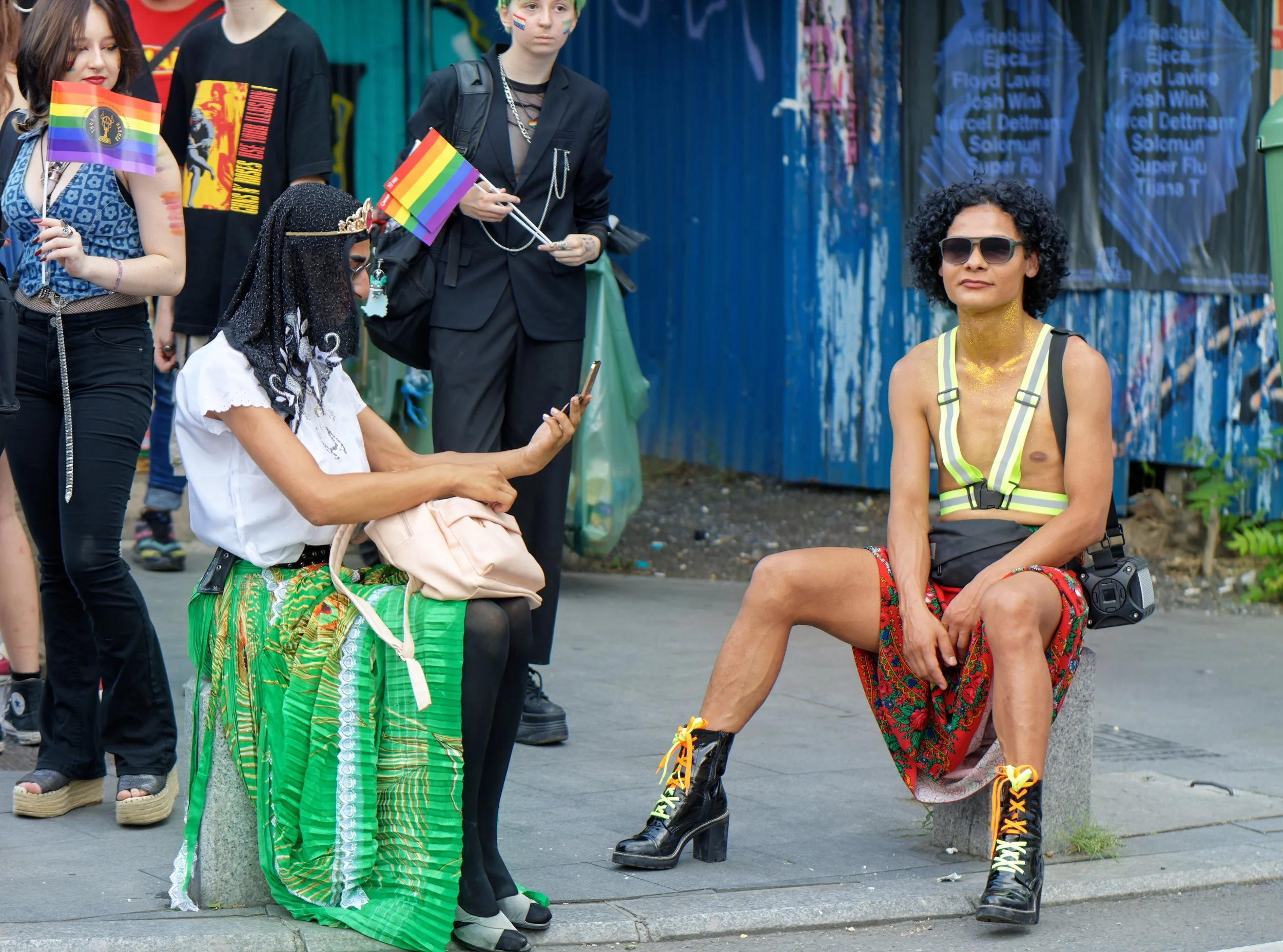
Phenomenon 2: Pride in the streets, but not in the cleats
Did you know there are currently no openly gay male players in top-level men’s football?
That absence becomes especially felt when major tournaments like the World Cup coincide with Pride Month.
One standout moment was the recent match between Iran and Egypt, taking place in Seattle during Pride parade celebrations, leading it to be informally dubbed the “Pride Match” — much to the chagrin of the coaches. The contrast was striking: celebration in the stands, while on the pitch, players came from countries where LGBTQ+ identities are criminalised, falsely targeted, or even punishable by death.
Football still lags behind many other sports when it comes to queer inclusion. And the idea that none of the world’s elite male players are gay is statistically implausible. This match is emblematic not just of the cultural contexts of countries opposed to homosexuality, but of the pressures the world’s most popular sport is shaped by. The suppression of gay players, alongside selective virtue signalling from football leagues and teams, sits in gross contradiction.
But it also points to a clear culture of fear off the pitch: fear of abuse from fans, media scrutiny, commercial risk, the challenge of breaking stereotypes around masculinity, and the very real threats players face, whether playing for a home nation that actively discriminates against homosexuality, or travelling for international fixtures they have no control over. Examples like the World Cup in Qatar or the Olympics in Russia show how queer athletes can be placed at risk simply by participation.
Until those structures shift, visibility will remain limited, not because gay players don’t exist, but because the environment still doesn’t feel safe enough for them to be seen. And the “Pride Match” in Seattle shows exactly why this reality persists.
Phenomenon 3: Ageism, privilege, and beating the odds
Cape Verde's appearance on the world stage brought global attention to a country many people couldn't previously place on a map.
Among its standout moments was undoubtedly goalkeeper Josimar Dias, better known as Vozinha, who became one of the oldest players to appear in a nation's World Cup debut match.
At 40, an age when most professional footballers have already retired, he made seven crucial saves against Spain, helping hold one of the strongest teams in the world to a 0–0 draw.
The response to his performance has been extraordinary. From being almost entirely unknown outside of football circles, Vozinha has amassed more than 17 million followers on Instagram and found a global fanbase almost overnight.
But this triumphant story also reminds us that where you're born and how old you are remain significant barriers, both in football and beyond. Looking more closely at Vozinhas' journey reveals a difficult truth: access shapes opportunity, and opportunity, in turn, shapes success.
While many elite European players are scouted, trained, and financially supported from childhood, Vozinha balanced football with jobs as a bus driver and electrician to support his family. His career took him through Cape Verde, Angola, Moldova and Portugal before international recognition finally arrived just weeks ago. It raises an uncomfortable question: how many world-class talents never reach this stage simply because they were born in the wrong place?
In elite football, age is also treated as a ceiling, even when performance suggests otherwise. Yet new science, including epigenetics, alongside remarkable sporting achievements, continues to challenge many of our assumptions about ageing. Diana Nyad's record-breaking swim from Cuba to Florida at the age of 64, something many experts once believed was humanly impossible, is just one example.
Vozinha's performance sits in that same space: proof that while physical limits are real, many of the limits we've accepted are cultural rather than biological.
Now, as speculation grows around Vozinha signing for a new club, his next move could become a fascinating test for the sport. Will football's long-standing obsession with youth continue to outweigh experience and late-emerging excellence? Or is the game finally ready to recognise that exceptional talent doesn't always arrive on schedule?
Phenomenon 4: Brave and battle-scarred
While stadiums erupt in celebration, another reality unfolds behind closed doors.
Domestic abuse rates are known to rise during major football tournaments and high-stakes matches. The issue has become so widely recognised that even the far right in this country can’t ignore it. Shockingly flippant comments by Reform Party MP Sarah Pochin, suggesting that England should keep winning to prevent incidents of domestic abuse, both acknowledge and trivialise a deeply serious issue.
Campaigns such as Unspoken Stat have worked to bring attention to this disturbing pattern, highlighting the correlation between major sporting events and increased violence and abuse within the home.
This is not new. England’s history with football hooliganism led to alcohol bans in stadiums as far back as the 1980s, after violence and disorder became deeply associated with the sport.
But while overt hooliganism has decreased, the private impact of emotional volatility remains a serious concern.
It is easy to focus on the joy of global sport. But that joy is not universal.
For many women and survivors, tournament season can mean increased risk rather than celebration.
Acknowledging this does not diminish the sport, it demands we confront its wider social impact. Football culture cannot be separated from the environments it influences, including homes, relationships, and systems of safety.
If sport can mobilise millions in celebration, it can also be part of preventing harm.
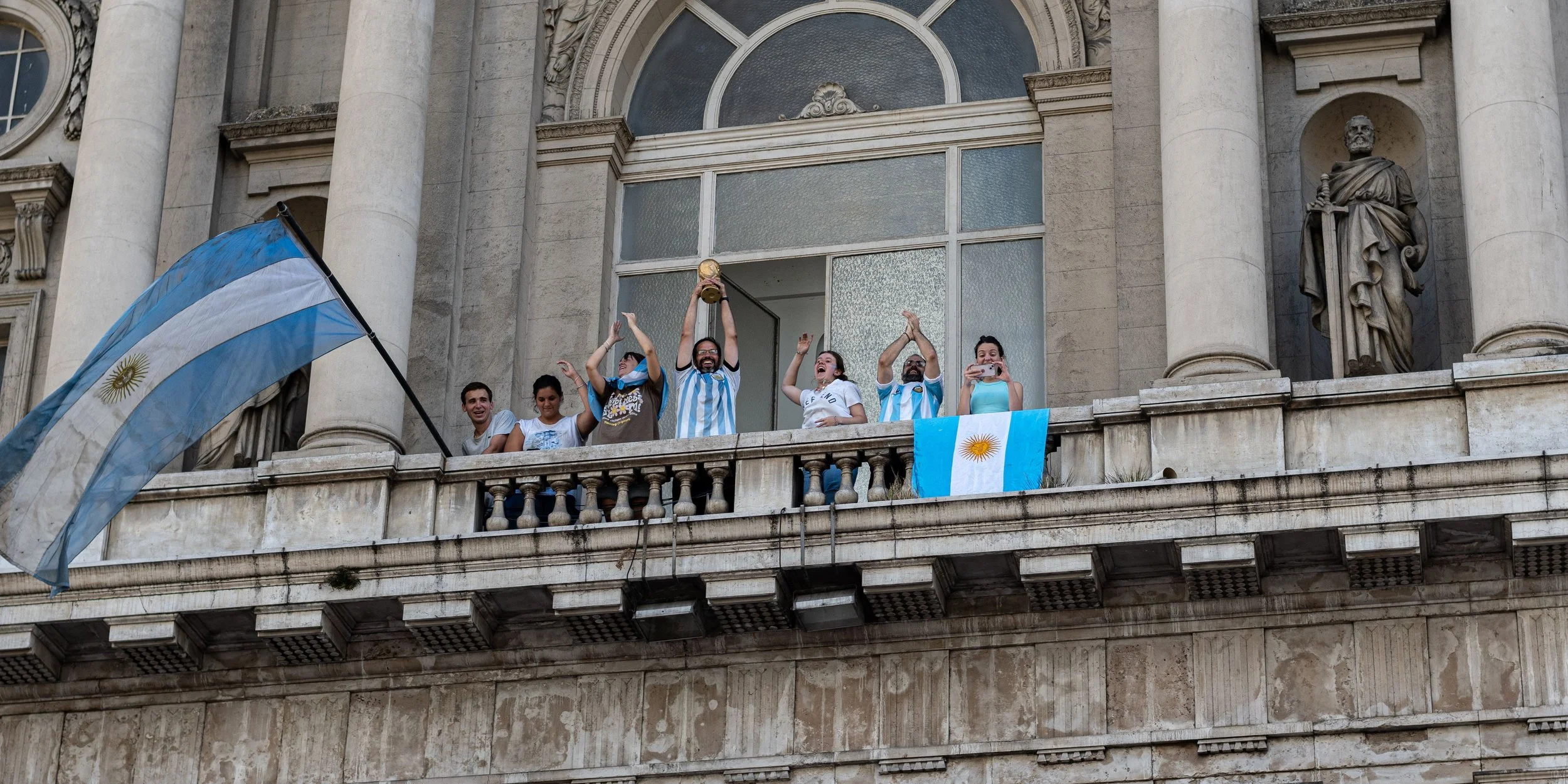
Phenomenon 5: Patriotism or Protest
In the UK, the World Cup has unfolded alongside rising political tension and the growing emergence of far-right movements using national symbols in divisive ways.
For a moment, people found themselves playing an unspoken game of “World Cup or Reform?” anytime an English flag was being waved—a reflection of how politicised national symbols have become.
Elsewhere, Iran has an even more complex and contested relationship with its national flag, shaped by decades of political upheaval and repression. For many within the Iranian diaspora, the World Cup has become a space of conflicted identity: a source of pride in their heritage, intertwined with deep unease over what the current flag represents and the ongoing suffering endured by many Iranians under the rule of the Islamic Republic and Islamic Revolutionary Guard Corps (IRGC).
Incidents such as pre-revolutionary flags being confiscated at stadiums, or players being labelled “traitors” if they refuse to sing national anthems, like the women's Iranian football team, highlight how tightly sport and politics are intertwined.
As activist Nazanin Nour has noted, it is increasingly difficult to separate the two: “sport has become political, and politics has entered sport.”
Flags have long been symbols of patriotism, which is a term defined as "love for one's country." But this tournament has hinted at a broader definition: that loving your country doesn't have to come at the expense of someone else's, or even prevent you from questioning and reimagining your own.
As the tournament progresses and flags continue to be swapped, shared, and proudly displayed across cultures, we're reminded that they can mean many things. They can be symbols of resistance, like the Pride flag or Iran's pre-revolution Lion and Sun flag. They can be reclaimed, as the English and Union Jack flags have been during this World Cup, rescued from the muddy waters of far-right extremism. And they can become symbols of unexpected solidarity and friendship, like Bangladesh’s love affair with Brazil and Argentina.
In a year dominated by conflict, political division and fear, this World Cup has shown us moments of extraordinary resilience, cultural exchange and human connection. But we've also been reminded that progress is never complete. The tournament has highlighted ongoing conversations around LGBTQ+ inclusion, gender-based violence, inequality and the politics of national identity.
The challenge now is not to leave those lessons behind when the final whistle blows. Because if this tournament has shown us anything, it's a glimpse of a utopia we can keep striving for.
On that note, we'll leave you with wise words from the Lynks World Cup anthem to ponder on:
"The whole world
Is going to shite
But if you kick that ball
It'll be alright..."
If you’re interested in exploring how to bring this kind of collaborative, inclusive, and high-energy culture into your organisation, we’d love to talk about our workplace cultural transformation and DEI strategy services.
