Dolly Parton: Working 9 to 5, what a way to make a legacy
Last week (25th August 2026) we lost one of the greatest singer-songwriters of all time, Dolly Parton. After a moment of feeling deeply sad (and mostly because I had always wanted to see her perform live, and now that will never be a possibility) I was immediately calmed by the knowledge of her enduring immortality. Personally, I take huge comfort in knowing that Dolly will live on forever through the legacy she has left behind. I am not simply talking about her music, though of course her musical achievements are vast; after all, she is one of the best-selling female artists of all time. No, I am talking about Dolly's extensive philanthropic activities that have left an indelible, positive mark on the world.
The many ways Dolly touched the lives of others became immediately evident in the outpouring of tributes that followed her death. What strikes me as interesting, and really inspired this newsletter, is how meaningful they were. There isn’t a whiff of generic praise for a beloved celebrity. People have been oddly specific; instead naming exactly how Dolly made their life demonstrably better. Perhaps it was the free book that arrived every month until they turned five, the scholarship that got them through college, the home that was rebuilt after the wildfires tore through their town, or the vaccine that reached a vulnerable relative in time (this is to name but a few of Dolly’s charitable endeavours). Even as a Dolly Parton fan, I had no idea the depth and breadth of her giving. These types of deliberate and consistent acts are the bedrock of Dolly’s legacy.
To me, Dolly’s message is clear: help your local community first. She supported several causes that were deeply important to her because they stemmed from her own experience of growing up in poverty: healthcare access and research, educational attainment, employment opportunities, and access to housing. Whilst making a dent on such complex societal problems may appear like a lofty aspiration, she started small: building and maintaining the vital infrastructure needed for local communities to thrive.
Take for example, the Imagination Library, a programme Dolly initially set up to improve literacy rates among children in her home county of Sevier in Tennessee. This was borne out of her desire to see more children given opportunities to learn to read because her own father never had that opportunity himself. The ambitions of this project started small and specific, before its widespread success meant it could expand to the entire state, and eventually the entire country. In fact, today, the Imagination Library has delivered over 330 million books to more than 3 million children across the US, the UK, Canada, Ireland, and Australia. This is an incredible example of legacy done right.
Legacy isn’t about who can shout the loudest or be the flashiest. It’s fundamentally about giving people the opportunity to live good lives. It’s setting people up for success; from educational attainment to employability, and ongoing access to quality healthcare and affordable housing. As inequality continues to spread across the world, these are the types of projects that are desperately needed.
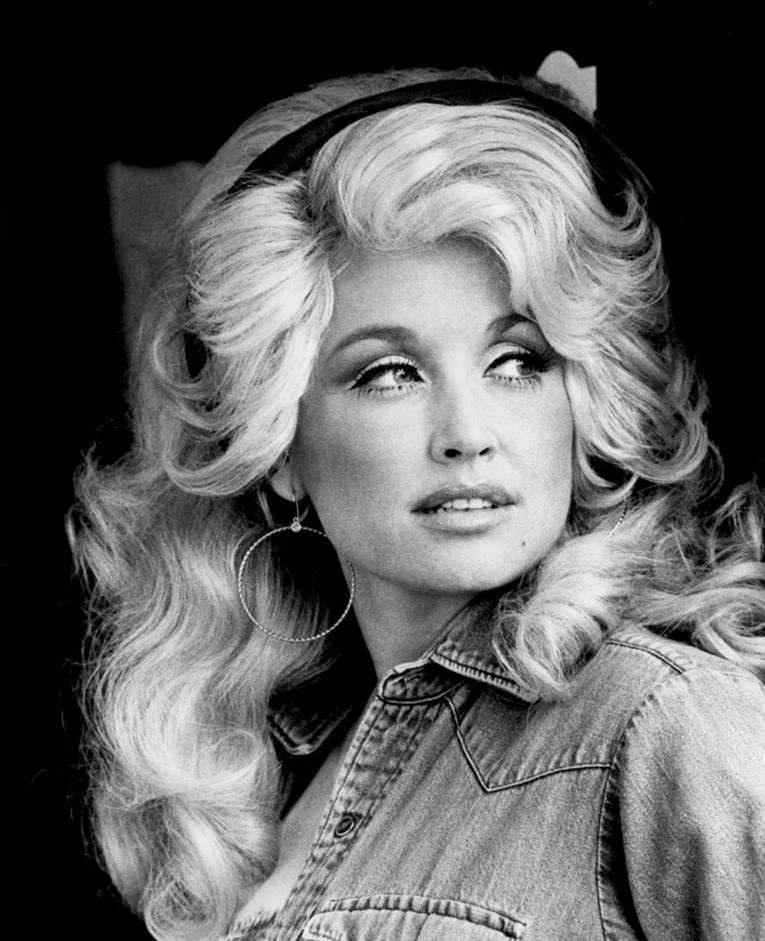
Dolly Parton in the 70’s. Credit: RCA Records
Take a leaf out of Dolly’s book
Increasingly businesses are talking about the value of legacy. It’s a word heard in boardrooms, spoken about in SLT off-sites, and usually in the same breath as "impact," or "purpose,". And yet most organisations never quite translate the desire for legacy into something tangible, never mind something sustainable or long-lasting. Oftentimes this inability to make a real impact will stem from an organisation’s lack of clarity around their own values, their own mission, and so they may sponsor a cause with no meaningful connection to what they do or what they truly care about. They may zone in on issues that look good in impact reports, rather than identifying an issue they're uniquely positioned to do something meaningful about.
We usually observe businesses taking 2 different approaches to impact work: the scattergun approach with disjointed initiatives that fail to make any waves at all; or the big-ticket item that is often performative and empty. In both cases, the result is activity without meaning; action that is neither specific nor sustained, and so never accumulates into anything a community would recognise, let alone remember. Both approaches are misguided. Businesses could learn a lot from Dolly. It’s not about a single grand gesture, it’s the same few causes, chosen because they hold personal meaning, with sustained action over time. This is the mechanism of successful legacy: pick something close to home, close to your values, and keep showing up for it.
We all want to feel as though we matter — business is no different.
One of the fundamental drivers of human behaviour is the desire to find meaning and make sense of life (Martela & Steger; 2016). One important component of meaning is the idea of "mattering", this is the sense that your existence has genuine value that you make a difference to the world. A natural extension of this is that we want to know that we will continue to matter long after we are gone. This need for symbolic immortality (Lifton, 1979), is a huge motivator for individuals, groups and even organisations. We may often forget that businesses are made up of humans, with very human needs. So that desire for legacy does not diminish just because we are embedded within a structure. The type of legacy may move from an individual desire to a collective one, but the desire is still there.
Dolly was uniquely placed to support the causes that she held dear; they were a fundamental part of who she was. Her origin story and her lived experience shaped her desire to improve the lives of those around her. She saw how difficult it was to navigate life with limited access to basic social infrastructure and opportunities to succeed. So, we come to the crux of the matter: the impact your organisation seeks to have will falter unless it is truly aligned to its value system. If an organisation lives by its values, such that they are a part of the fabric of all operations and processes, then understanding how to give back to society not only becomes clearer, the actions themselves become non-negotiables. And this is what we should all be aiming for.
At Ardent, this is the work we do every day: helping businesses get clear on the values that are theirs, not borrowed, not aspirational, but true to who they are. From here we build CSR and impact strategies that map directly onto these values. As Dolly has shown us, when you move through the world authentically, legacy will follow:
“I just give from my heart.”
- RIP Dolly Parton
References
Lifton, R. J. (1979). The broken connection: On death and the continuity of life. American Psychiatric Pub.
Martela, F., & Steger, M. F. (2016). The three meanings of meaning in life: Distinguishing coherence, purpose, and significance. The Journal of Positive Psychology, 11(5), 531-545.